
Going on a road trip is one of the most fun (and easiest) ways to travel with a dog. But before you head off on the road, you’ll need to make sure you’re packed everything you need, especially if you’re heading to the countryside. These are my recommendations…
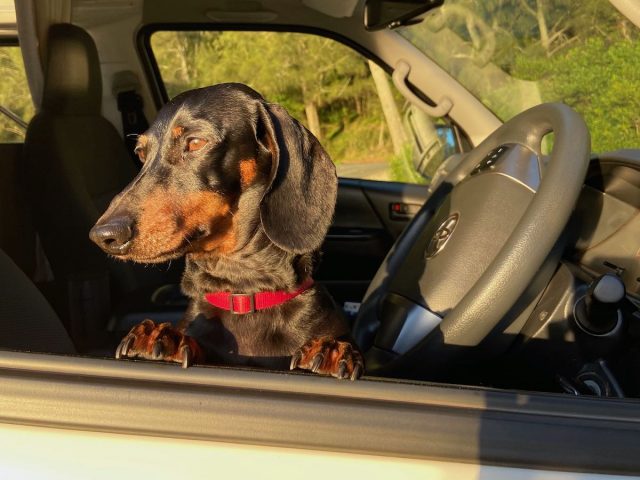
Dog Car Seat, Crate or Seatbelt Attachment
One of the most important things to pack when taking your dog on a road trip, no matter the length, is a way to keep them secure in your vehicle. This is essential for keeping your dog safe in the case of an accident, plus is mandated by many countries and states, such as the UK Highway Code.
One of the easiest ways to keep small and medium sized dogs secure is with a dog car seat. There are a wide variety of car seats that can be attached to your car in different ways. Many car seats will also give a boost to your dog so they can see outside the window, plus keep your seats clean from dirty paws.
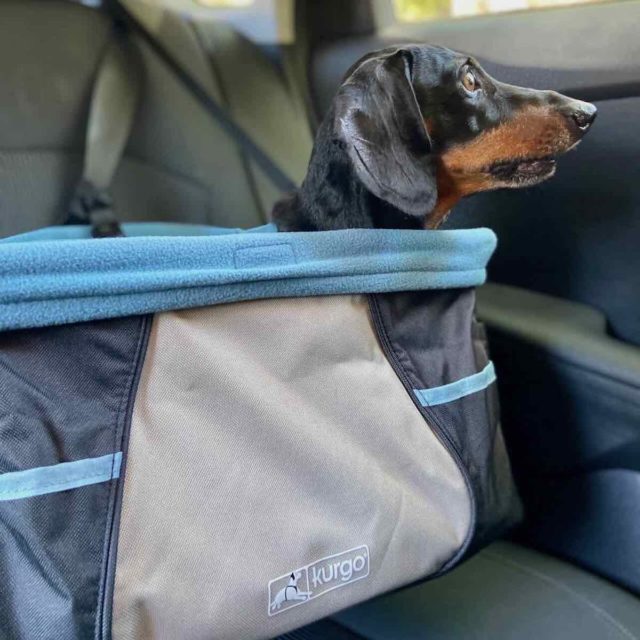
Another easy option is to buy a seatbelt attachment for your pet. These attach to your dog’s harness or collar then clip around a belt or into the buckle. You may also consider purchasing a special harness for your dog that has been crash-tested. Seatbelt attachments are particularly useful when flying to your destination then hiring a pet-friendly hire car.
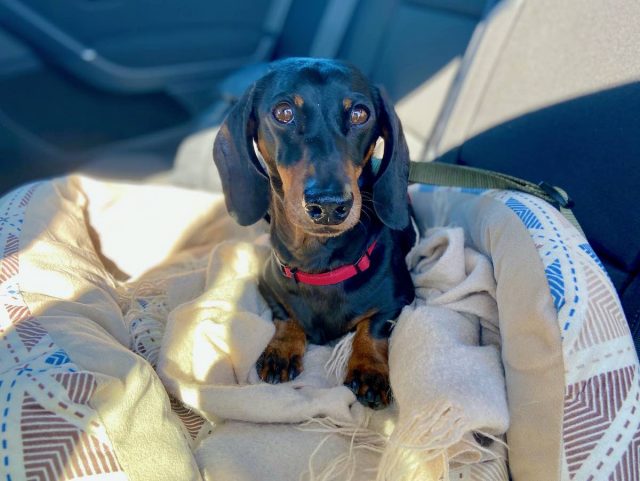
Alternatively, you can secure your dog in a crate or carrier, that is then secured to the car. For larger dogs, you’ll probably need to place them in the boot area in their crate. A dog guard or mesh divider for the rear of the vehicle is another great option for large dogs.
In any case, it’s probably best to test out your equipment before you depart on a longer road trip, making sure you know how to set everything up and that your pup is comfortable and secure.
Collar or Harness, Leash & Tag
The next most important thing to pack on your road trip is your dog’s collar or harness and a leash. As well as being required for many seatbelt attachments and dog car seats, you’ll also need to keep your dog leashed most of the time, except inside your accommodation and in designated off-leash areas.
There’s a wide variety of collars to choose from – find out more about the best dog collars. Consider packing a spare in case one gets wet or dirty.

Don’t also forget to attach an ID tag to your dog’s collar, engraved with the number of a mobile phone you’ll be travelling with. When away from home and in a strange environment, it’s even more important there’s a way for your dog to be reunited with you if they run off!
Dog Bed, Blanket & Towels
Whether or not your dog will be using their dog bed when they’re travelling by car, it’s still always a good idea to pack your own dog bed. While some accommodation will supply a bed, many dogs will appreciate having their own familiar bed when staying in a strange place, especially if the supplied bed is too big or small for them.
Dogs blankets and old towels also often come in handy in many different situations. Blankets or towels can be used for drying off wet dogs on rainy days, covering car seats or the furniture at accommodation, or just keeping your dog warm on cold days.
Food, Treats & Bowls
Of course you’ll need to bring along food for your dog. I always like to pack extra food in case there’s a delay in returning. And what kind of road trip doesn’t involve treats, including for your dog? Outdoor adventures burn up extra energy, plus treats are a great enticement for taking photos with your pup.
When it comes to food and water bowls, some accommodation might provide bowls, but I often still bring along my own, just in case. Luckily there’s plenty of room in a car!
Also make sure you have a water bowl that your dog can drink from during the day. For long days of driving, the K9 cruiser bowl is a well regarded spill-proof bowl sold in Australia. Alternatively, collapsible water bowls are easy to pack and take along on walks.
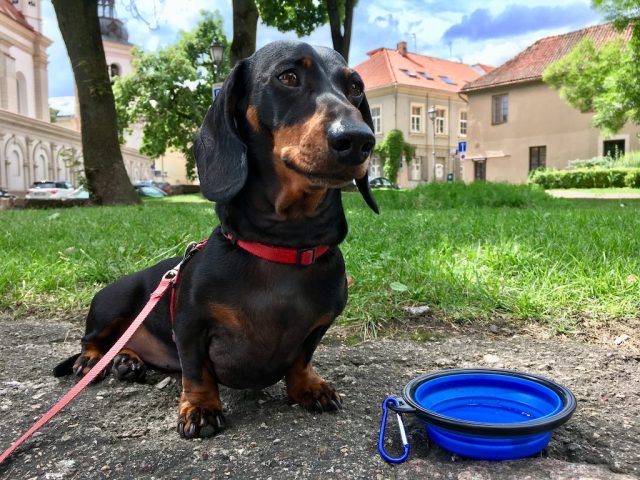
Finally, don’t forget to pack some water bottles for both yourself and your pup. I always have a couple in the car doors, especially on long drives in the country.
Tick Treatment
Depending on where you’re heading on your road trip, ticks may or may not be an issue. Make sure your dog is up-t0-date with their tick prevention medication, whether a chew or spot-on, or use a tick repellant collar.
For instance, in Australia paralysis ticks are an issue along the east coast, from Queensland to eastern Victoria. Ehrlichiosis, which is transmitted on brown dog ticks, is now endemic in much of WA, the NT, northern SA and outback Queensland. Find out more about keeping your dog safe while travelling in Australia.
In the United States, be aware of Lyme disease. While in Europe, see my tips on keeping your dog safe from Leishmaniasis, transmitted by sand flies, that are also usually repelled by tick treatments.
Final Tips
A few other things that you may wish to travel with include:
- Vaccination & registration records – Required by some accommodation
- Motion sickness treatment – If your dog gets car sick
- Your dog’s favourite toys
And of course, plenty of poop bags!
About the Author

Shandos Cleaver is the founder of Travelnuity: Dog-Friendly Travel. She has travelled extensively with her Miniature Dachshund, Schnitzel, including to 33 countries across Europe, every state and territory of Australia except Tasmania, and 10 of the United States. She’s passionate about providing inspiration and information to others wanting to travel with their dogs, whether close to home or internationally.